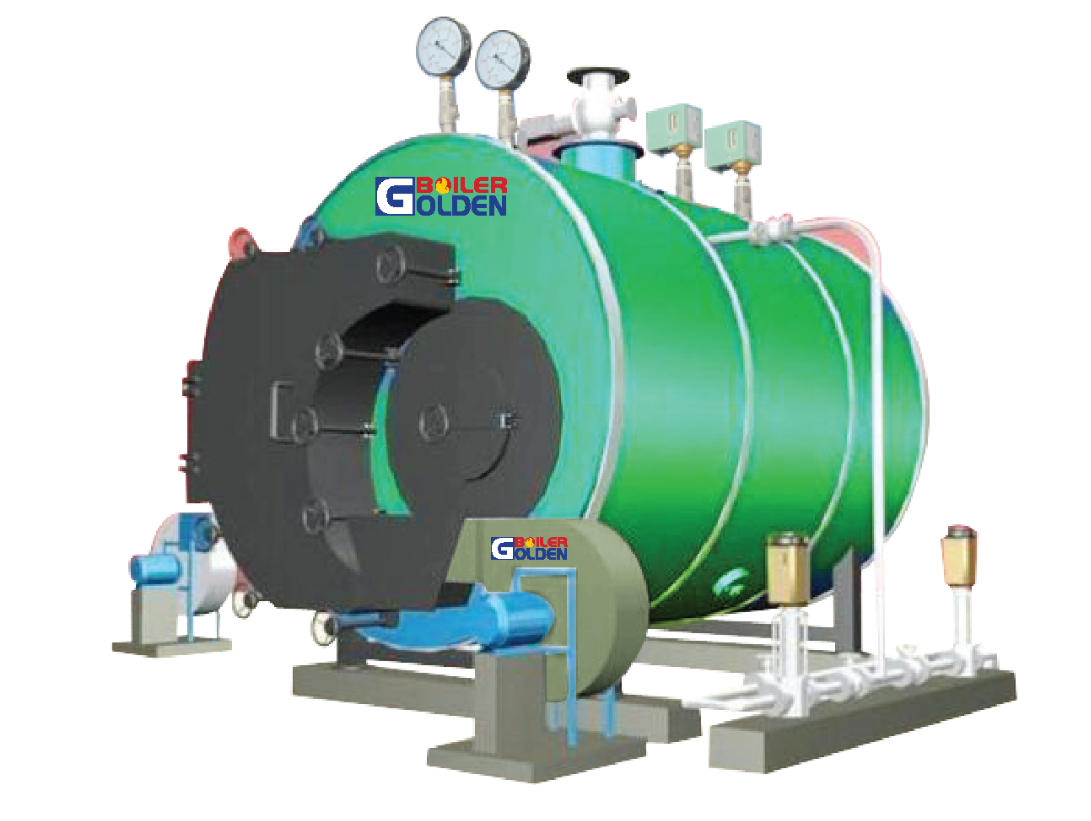
Golden Standerd Horizontal Husk Fried Steam Boiler
Key Info
| High Efficiency | : | Achieves thermal efficiency up to 85% due to optimized combustion volume and large grate areas. |
| Fuel Versatility | : | While optimized for Rice Husk, many models can also burn coconut shells, wood chips, and saw dust. |
| Safety & Compliance | : | Built using 100% imported boiler-grade steel (ASTM-SA-516, GR-70) and typically certified by government inspection authorities. |
| Environmental Impact | : | Designed for Low NOx emissions, making them more environment-friendly than older coal-fired units |
| Automation | : | Features a fully automatic electric control panel for water level management, pressure control, and fuel feeding |
| Design | : | The horizontal 3-pass fire tube design ensures maximum heat transfer and dry steam quality. |
1. The Combustion System (Furnace)
The heart of the boiler is the furnace, which can be either Internal (built inside the boiler shell) or External (a separate brick-lined chamber).
- Husk Feeding: Rice husk is typically fed via a screw conveyor or a pneumatic blower system onto a stationary or dumping grate.
- High-Temp Combustion: The furnace is lined with high-duty refractory bricks that retain heat, ensuring the husk burns completely even if it has a slightly higher moisture content.
2. The 3-Pass Heat Exchange Process
The "3-pass" terminology refers to the number of times the hot combustion gases travel through the boiler before exiting the chimney. This maximizes the time the water has to absorb heat:
- 1st Pass: Gases travel through the main furnace tube (the hottest zone).
- 2nd Pass: Gases return through a set of smaller smoke tubes located above or beside the furnace.
- 3rd Pass: Gases travel back through a final set of tubes toward the smoke box and out to the chimney.
Benefit: This multi-pass system ensures that very little heat is wasted, keeping the exhaust temperature low and the steam output high.
3. Shell and Tube Construction
The outer "shell" is a large cylindrical pressure vessel filled with water. Inside this shell are the smoke tubes.
- Heat Transfer: As hot gases pass through the tubes, they transfer heat to the surrounding water, eventually causing it to boil and turn into steam.
- Steam Space: The upper portion of the shell acts as a reservoir for the steam to collect before it is released through the Main Steam Stop Valve (MSSV) to your factory line.
4. Safety and Control Mechanisms
Because these boilers operate under high pressure, they are equipped with multiple "fail-safe" layers:
- Mobrey Water Level Controller: Automatically starts the feed pump when water is low and shuts down the furnace if water hits a "dangerously low" level to prevent the shell from overheating.
- Pressure Switches: Automatically stop the fuel feeder or air blower once the desired steam pressure (e.g., 10 bar) is reached.
- Safety Valves: Mechanical valves that "pop" open to release excess steam if the pressure exceeds the safe limit.
5. Dust Collection (Environment)
Since burning rice husk produces significant ash (silica), these boilers are usually paired with a Multicyclone Dust Collector. This unit uses centrifugal force to separate ash particles from the flue gas before they reach the chimney, ensuring the smoke emitted is clean and meets environmental standards.
Content for Technical Specifications goes here. You can add tables, lists, and detailed information about the product's features.
| Steam Capacity | 500 kg/hr to 6,000 kg/hr |
| Working Pressure | 10.5 kg/cm² (standard) up to 17.5 kg/cm² |
| Boiler Type | Horizontal Fire Tube / Smoke Tube |
| Thermal Efficiency | 78% – 85% |
| Fuel Type | Rice Husk / Agricultural Biomass |